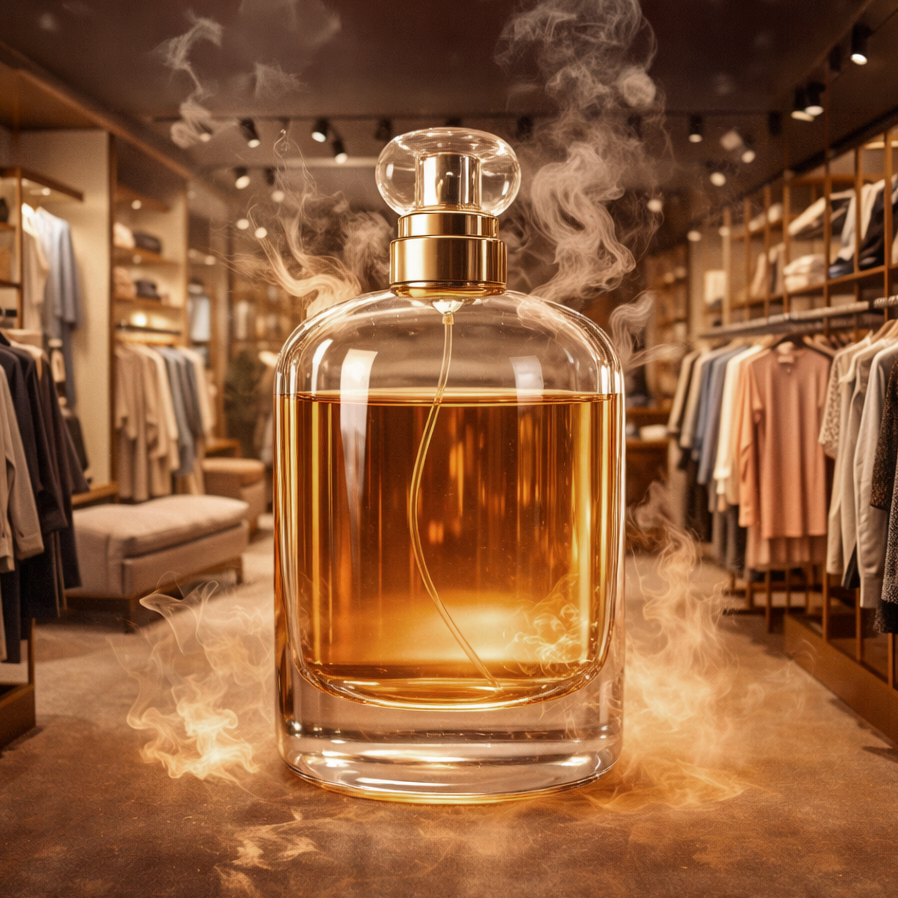

In the world of sensory marketing, it's common to hear about the power of olfactory memories. However, there's little discussion about what happens before the aroma reaches the environment: the science of its composition.
For a professional, choosing a fragrance is not just an aesthetic decision; it's a performance decision. At Olfacta Labs, we believe that the effectiveness of an olfactory signature begins with the purity of the molecule.
In this article, we will dissect the anatomy of a scent and understand why the origin of the raw material is what separates a fragrant environment from a memorable experience.
The Complexity of the Olfactory Pyramid
A high-quality aroma is not a single note, but a living architecture. The quality of the raw material determines the perfect transition between these three phases:
Headnotes: The first impression. Low-quality raw materials tend to be aggressive or excessively alcoholic on first contact.
Heart Notes: The soul of the aroma. This is where the purity of the oils defines whether the fragrance will have body and personality.
Base Notes: Persistence. Only high-tech fixatives and fine resins ensure that the aroma remains elegant after hours of diffusion, without changing.
Chemical Stability
Have you ever smelled an aroma that, after some time in the diffuser, seemed to have changed its scent? This occurs due to the oxidation of unstable ingredients.
Laboratory-grade raw materials undergo stability tests that guarantee the scent you experience today will be exactly the same six months from now. For a professional, consistency is key to brand identity.
Purity and Safety
Beyond the sensory pleasure, there is the technical responsibility. Low-cost fragrances often use solvents and phthalates that can be irritating.
Olfacta's Difference: We work exclusively with raw materials that comply with IFRA (International Fragrance Association) standards. This ensures that the aroma is safe for continuous diffusion in environments with high traffic, being hypoallergenic and free of toxicity.
The Impact on Diffusion by Nebulization
Cold misting technology (common in professional systems) requires the fragrance to have a specific density. Impure raw materials can clog the atomizing nozzles and compromise the equipment. Investing in olfactory quality is also protecting your investment in diffusion technology.
Conclusion
The anatomy of an excellent aroma is invisible to the eye, but evident to the senses and results of a business. When the raw material is treated with scientific rigor, the result is not just a "pleasant smell," but a powerful, safe, and lasting branding tool.